



Turn websites into first-class Linux desktop applications with Rust, Tauri, and the system WebView.
Build native-feeling, standalone web app wrappers with CLI-first Linux integration.
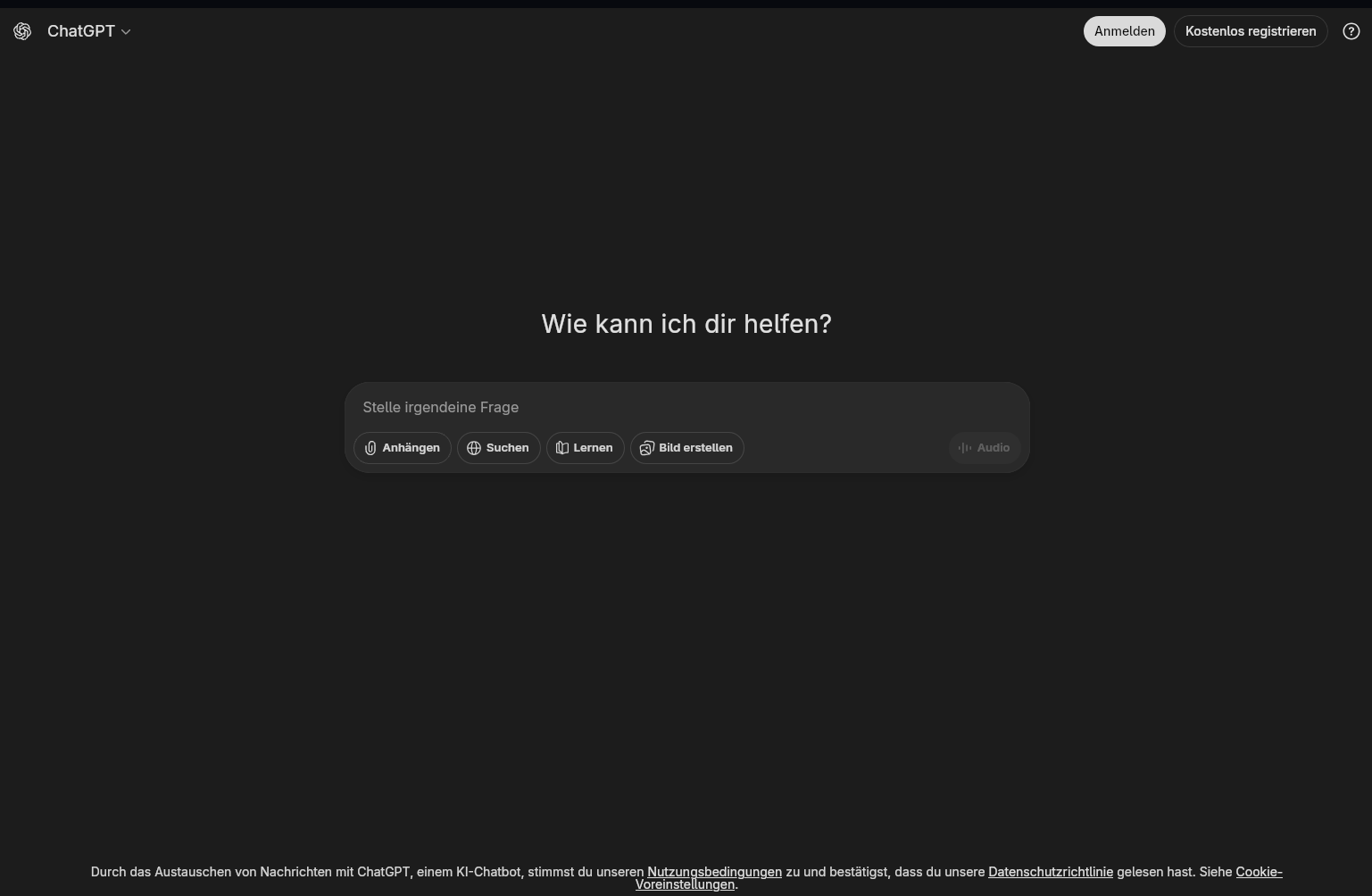

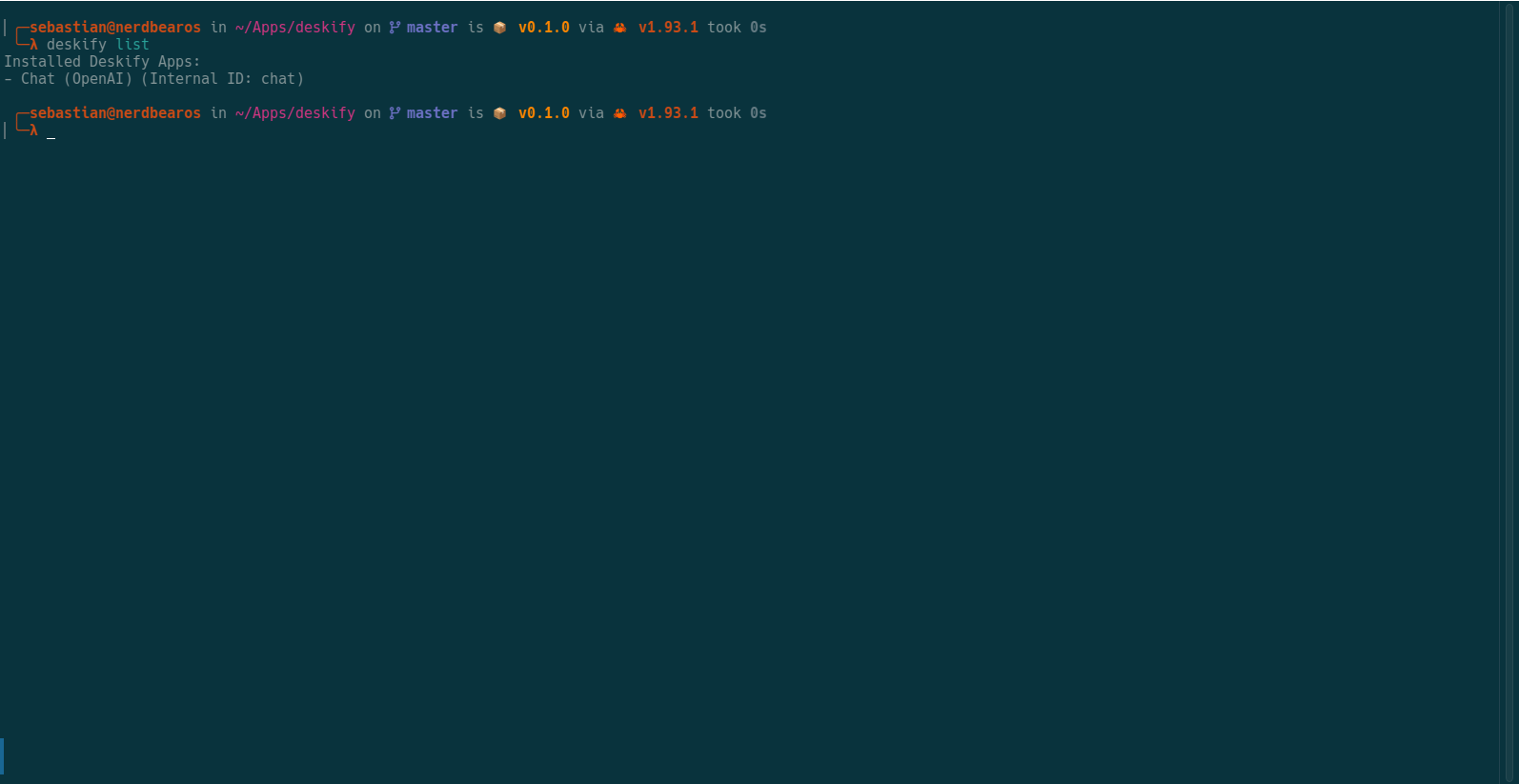
Screenshots: KDE Plasma on Arch Linux (alpha MVP workflow).
--- ## Why Deskify Exists Web apps are now core tools, but Linux desktops still treat them like second-class citizens. - Electron-based wrappers solve distribution, but often at high RAM/disk cost. - PWAs help in some browsers, but desktop integration is inconsistent across environments. - The original [Nativefier](https://github.com/nativefier/nativefier) proved the need, but it is now unmaintained. `deskify` takes a Linux-first approach: it turns a website into a native-feeling desktop app using [Tauri](https://tauri.app/) and the system webview (for example `webkit2gtk`) instead of bundling a full browser engine per app. ## Problem Fit (Why Deskify vs. Other Approaches) Deskify is optimized for Linux users who want native desktop integration and CLI-friendly automation for web apps, without shipping a bundled browser runtime per app. The comparison below is intentionally rough and practical (not benchmark marketing). It describes tradeoffs, not winners in every category. | Approach | Runtime model | Desktop integration | Automation / scripting | Isolation / sandbox | Setup complexity | Offline capability | | --- | --- | --- | --- | --- | --- | --- | | Electron / Nativefier | Bundled Chromium per app | Good | Low to medium | Per-app process, app-bundled runtime | Easy to medium | Depends on the site | | PWA | Browser runtime | Limited / browser-dependent | Low | Shared browser context | Very easy | Depends on browser + site | | Flatpak web app models | Sandbox-oriented runtime model | Good | Limited | Strong sandbox model | Medium | Depends on runtime + site | | **Deskify** | System WebView | Native (`.desktop`, icons, WMClass) | **High (CLI-first)** | Medium (shared system WebView security model) | Medium (Tauri prerequisites) | Depends on the site | ### Deskify Focus (Today) Deskify focuses on: - system-native Linux desktop integration - minimal runtime overhead by relying on the system WebView - automation-friendly CLI workflows - straightforward local install/remove lifecycle management Deskify intentionally does not aim to: - replace full browser sandbox products - provide a cross-platform abstraction layer - ship bundled browser runtimes per generated app ## How Deskify Works Today (Alpha / MVP) `deskify` is ready for public use and testing as an **early MVP**, but it is **not production-hardened yet**. - **Platform scope:** Linux only - **Current architecture:** one generated Tauri wrapper project per app - **Build model:** `deskify` compiles the wrapper locally on your machine - **Why this MVP design:** simpler debugging, isolated failures, low contributor complexity - **Tradeoff:** build time and distro-specific setup issues become user-facing - **Test coverage:** currently limited (core behavior is implemented, automated coverage is growing) ### MVP Architecture (Today) ```mermaid flowchart TD A[deskify CLI] --> B[Generate temporary Tauri wrapper project] B --> C[Fetch or copy icon] C --> D[Write tauri.conf.json + source files] D --> E[Run cargo tauri build locally] E --> F[Install binary to local executable dir] F --> G[Install icon + .desktop entry] G --> H[Launch from Linux app menu] ``` ### Known Limitations - Requires Tauri/Linux system dependencies to be installed locally before `deskify build` - Generated app build success can vary by distro/system setup (WebKitGTK/Tauri prerequisites) - No official cross-platform support (Windows/macOS) yet - GitHub Releases / binary automation for `deskify` itself may lag behind source updates during early MVP ## Where Deskify Is Going Deskify aims to make web applications **first-class Linux desktop applications**. Planned evolution (direction, not promise): - Shared runtime model for multiple apps - Per-app config and icon installs without full rebuilds - Stronger Linux desktop integration (deployment, automation, kiosk/admin workflows) - Better distro compatibility guidance and troubleshooting The current per-app build approach is intentional for the MVP. The goal is to keep it simple now while making the longer-term direction visible. ### Planned Evolution (Concept) ```mermaid flowchart TD A[deskify CLI] --> B[deskify runtime binary] A --> C[App config files] A --> D[Icons + .desktop entries] C --> E[apps/chatgpt.json] C --> F[apps/netflix.json] B --> G[Load app config at launch] G --> H[Open site in system webview] D --> I[Linux app menu integration] ``` ## Why Not Just Use Flatpak Web Apps / PWAs / Electron? The table above covers the technical tradeoffs in more detail. In practice, `deskify` is most useful when you want: - a CLI-first workflow for repeatable installs and automation - Linux-native desktop integration (`.desktop`, icons, window class behavior) - a system-WebView-based runtime model instead of shipping a bundled browser per app ### Key Features - **System-WebView Runtime Model:** Generated wrappers stay small because Deskify relies on the system WebView instead of bundling a browser runtime per app. - **Automatic Icon Fetching:** Scrapes high-quality 128x128 favicons automatically using the Google Favicon API. - **XDG-Compliant System Integration:** Safely creates `.desktop` entries in `~/.local/share/applications` and manages application icons in `~/.local/share/icons/hicolor/`. - **Wayland/X11 Ready:** Perfectly binds `StartupWMClass` to ensure your DE groups the app exactly to its custom icon (no generic gear icons in GNOME/KDE taskbars). - **Kiosk / Fullscreen Mode:** Pin applications perfectly as dashboards. - **User-Agent Spoofing:** Trick picky sites (like WhatsApp Web) into working within the webview. - **Clean App Management:** Effortlessly list and remove created apps without leaving orphaned files behind. --- ## 🚀 Installation ### 1. System Dependencies Because `deskify` compiles Tauri applications natively on your machine, you need the standard Tauri prerequisites installed before using it. On **Ubuntu / Debian**: ```bash sudo apt update sudo apt install libwebkit2gtk-4.1-dev \ build-essential \ curl \ wget \ file \ libssl-dev \ libgtk-3-dev \ libayatana-appindicator3-dev \ librsvg2-dev ``` On **Arch Linux / Manjaro**: ```bash sudo pacman -S webkit2gtk-4.1 \ base-devel \ curl \ wget \ file \ openssl \ appmenu-gtk-module \ gtk3 \ libappindicator-gtk3 \ librsvg \ libvips ``` *(For Fedora or other distros, refer to the [Tauri Prerequisites Guide](https://v2.tauri.app/start/prerequisites/).)* ### 2. Rust & Tauri CLI You'll need the Rust compiler and the Tauri CLI to compile the generated apps. ```bash # Ensure Rust is installed curl --proto '=https' --tlsv1.2 -sSf https://sh.rustup.rs | sh # Install Tauri-CLI globally cargo install tauri-cli --version "^2.0.0" ``` ### 3. Install deskify Clone the repository and install it directly via Cargo: ```bash git clone https://github.com/spalencsar/deskify.git cd deskify cargo install --path . ``` --- ## 🛠️ Usage ### Creating an App (`build`) The `build` subcommand requires a `--url` and a `--name`. ```bash deskify build --url "https://chatgpt.com" --name "ChatGPT" ``` Once the build finishes, `ChatGPT` will instantly appear in your system Application Launcher (e.g., Rofi, Wofi, GNOME Dash). `deskify` derives a safe internal ID from the app name (for example, `ChatGPT` becomes `chatgpt`). #### Advanced Build Options ```bash deskify build \ --url "https://netflix.com" \ --name "Netflix" \ --fullscreen \ --no-decorations \ --user-agent "Mozilla/5.0 (Windows NT 10.0; Win64; x64) Chrome/120.0.0.0 Safari/537.36" \ --dark-mode \ --width 1280 \ --height 720 ``` * `--icon